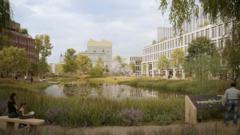
Cambridge Science Park, one of Europe's oldest science parks, has submitted plans for a major redevelopment that could generate 20,000 jobs and introduce expanded public spaces across the site.
The Park, established in 1970 as a pioneer for research and innovation clusters, has long served as an anchor for Cambridge's tech and biotech industries. The redevelopment proposal signals ambition to modernize aging infrastructure while maintaining the site's role as a hub for cutting-edge science and commerce.
Job creation numbers indicate substantial expansion. The 20,000 figure dwarfs the current workforce on-site and reflects growing demand for lab space, office facilities, and research infrastructure in the region. Cambridge has become a powerhouse for life sciences, AI research, and deep tech startups over the past decade, with venture capital pouring into the area at record rates.
Public space integration marks a shift in how science parks operate. Historically, these complexes functioned as closed campuses. The new design appears to balance commercial density with amenities for workers and visitors, including pathways, green areas, and gathering spots. This approach mirrors trends across innovation hubs globally, where employee experience and community connectivity now factor into competitive talent recruitment.
The submission comes as Cambridge faces mounting real estate pressure. Limited land availability, soaring property costs, and competition from other UK innovation centers like Oxford and emerging hubs in London have intensified. Redevelopment offers a way to maximize existing assets while sustaining the region's edge in attracting global research institutions and tech talent.
Planning approval remains uncertain. Local authorities will weigh job creation potential against traffic, housing pressure, and environmental impacts. The outcome will shape whether Cambridge cements its position as Europe's preeminent science hub or whether growth constraints begin eroding its competitive advantage.