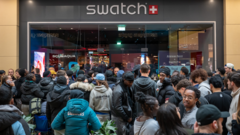
Swatch shuttered its stores for a second consecutive day following massive customer demand for a newly launched £335 pocket watch. The Swiss watchmaker faced overcrowding issues as fans lined up outside retail locations, forcing the company to temporarily close shops to manage the surge.
The pocket watch release triggered unprecedented foot traffic that overwhelmed store capacity and staff. Swatch made the decision to pause operations rather than risk safety concerns or further strain on operations. The move comes after similar closures the previous day, signaling sustained demand that caught the company off guard.
The limited edition timepiece appears to have tapped into strong collector interest and nostalgia appeal. At £335, the watch commands a premium but remains accessible compared to luxury watch alternatives. Swatch's heritage and brand loyalty among enthusiasts likely fueled the rush, with shoppers treating the launch as a must-have drop comparable to sneaker releases or designer collaborations.
The closures generated mixed reactions online. Supporters viewed the demand as a validation of Swatch's revival efforts and design appeal. Critics questioned whether the company adequately prepared inventory and staffing levels for predictable surge interest. Some argued the artificial scarcity created by temporary closures actually amplified hype and social media buzz, potentially a calculated strategy rather than an operational failure.
This moment reflects how traditional watch brands now compete with the same collector mentality that drives sneaker and streetwear drops. Swatch has successfully positioned itself as culturally relevant beyond its affordable watch positioning, attracting younger audiences and resale market participants.
The closures ended after the second day, though Swatch remained tight-lipped about restocking plans and future launch strategies. The incident underscores how even established heritage brands can generate Gen-Z level frenzy around physical product releases.