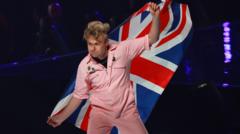
The UK has endured a Eurovision drought, delivering four consecutive disappointing results that have left the BBC scrambling to reassess its strategy for the 2027 contest.
Britain's Eurovision performance has cratered in recent years. The country finished with just one point at the 2023 contest in Liverpool, a humiliating result that sparked immediate questions about song selection, artist choice, and presentation strategy. That single-point finish became emblematic of a broader pattern: the UK consistently fails to connect with the wider European voting bloc, despite hosting the competition just years earlier.
The BBC faces pressure to overhaul its Eurovision approach. Song choice matters enormously. The UK has repeatedly submitted entries that misread the room, leaning on safe, domestically-palatable pop rather than the theatrical spectacle and melodic hooks that dominate the contest. Previous years saw similar struggles, with entries failing to crack the top ten and burning through Eurovision's credibility as a launchpad for British artists.
The four-year slump reflects deeper problems. The UK's voting demographic and the composition of entries haven't aligned with what European audiences actually vote for. While some nations employ rigorous selection processes and tap established regional hitmakers, the BBC's process sometimes feels detached from Eurovision's real mechanics. Juries and public voters across Europe gravitate toward camp, novelty, instrumentation, and performers willing to fully commit to spectacle. Britain's entries have often felt undercooked by comparison.
The 2027 Eurovision offers a reset moment. The BBC must study what works: countries like Sweden, Italy, and Ukraine consistently score well because their entries feel confident and tailored to the contest's particular aesthetic. The corporation needs to invest in better talent scouting, bolder musical choices, and artists genuinely excited by Eurovision's pageantry rather than reluctant participants.
One point was a wake-up call. The BBC now has two years to build something worth voting for.