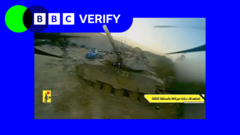
Hezbollah has released footage documenting a shift toward more sophisticated drone warfare tactics targeting Israel, according to BBC Verify's analysis of dozens of attack videos. The fibre-optic drones shown in the recordings represent a tactical evolution for the militant group, moving beyond earlier unmanned systems with enhanced precision and real-time operator control capabilities.
The videos reveal operational patterns that suggest Hezbollah has refined its drone deployment strategy over recent months. Fibre-optic technology allows operators to maintain direct line-of-sight control throughout flights, enabling mid-course corrections and target adjustments that earlier, GPS-dependent systems could not achieve. This represents a meaningful technological upgrade in the group's aerial attack capacity.
BBC Verify's examination included verification of locations, timestamps, and technical specifications visible in the released footage. The analysis confirms that multiple attacks documented on video correspond to confirmed incidents along the Israel-Lebanon border region. The group's decision to publicize these attacks underscores a dual purpose: demonstrating military capability to internal and regional audiences while signaling technological advancement to potential adversaries.
The shift toward fibre-optic systems coincides with broader regional tensions and reflects investments Hezbollah has made in unmanned weapons development. Israeli military sources have acknowledged the emerging threat posed by these enhanced drones, marking them as operationally distinct from earlier models the group employed.
This tactical evolution occurs within a broader context of asymmetric warfare along the Israel-Lebanon frontier, where non-state actors increasingly deploy precision weapons previously associated with state militaries. The fibre-optic drone capability narrows the technological gap between conventional military forces and organized militant groups, raising escalation risks in an already volatile region.