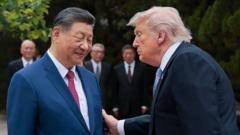
Trump's planned Beijing trip signals a potential shift in how his MAGA movement approaches China policy, departing from the hardline stance that defined much of his first term. The visit represents a notable softening in rhetoric toward Beijing, a move that experts argue will reshape expectations among Trump's political base.
During his presidency, Trump imposed tariffs, restricted technology transfers, and branded China as a strategic competitor. That aggressive posture resonated deeply with his MAGA supporters, who embraced protectionist economic nationalism. The Beijing trip complicates that narrative. Trump's willingness to engage directly with Chinese leadership suggests pragmatism over confrontation, a calculation that may not sit uniformly across his coalition.
Within MAGA circles, critics worry the trip signals backsliding on China accountability. Hard-liners who pushed for decoupling American and Chinese supply chains, cracking down on forced labor, and containing Beijing's technological advancement see diplomatic engagement as a betrayal of nationalist priorities. Others view the visit as strategic positioning, a chance to negotiate from strength rather than sustain perpetual tension.
The BBC report notes that Trump's diplomatic overture will likely trickle through the broader MAGA base, reshaping how grassroots supporters view China policy going forward. This creates friction between Trump's transactional dealmaking instincts and the ideological commitment many supporters maintain toward confronting Chinese economic and geopolitical power.
The tension reflects deeper splits within conservatism. Trump's transactional approach to Beijing differs sharply from neoconservative frameworks that emphasize long-term strategic competition. Whether MAGA voters follow Trump's lead or maintain hardline positions remains uncertain, but the Beijing trip marks a test of his movement's cohesion on one of its defining issues.