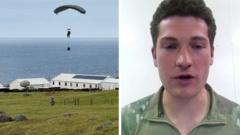
A British Royal Navy soldier parachuted onto Tristan da Cunha, one of the world's most remote inhabited islands in the South Atlantic, to deliver emergency medical aid following a Hantavirus outbreak. The specialized operation involved a team coordinating the dangerous airdrop to the island, which sits roughly 1,500 miles from the nearest mainland and has no airport or harbor capable of receiving large vessels.
Hantavirus, a potentially deadly rodent-borne pathogen, spread through the island's population of around 240 residents. The infection prompted authorities to seek urgent medical intervention. Standard supply routes proved insufficient given the isolation and weather conditions typical of the South Atlantic location, forcing officials to authorize the parachute deployment.
The operation underscored both the extreme remoteness of Tristan da Cunha and the logistical challenges facing island communities during health crises. The soldier's successful jump delivered critical medical supplies and expertise directly to residents who otherwise faced severe delays in receiving treatment. Hantavirus infections carry mortality rates between 1 and 8 percent depending on the virus strain, making rapid medical response essential.
Tristan da Cunha has endured previous health emergencies complicated by its isolation. The island relies on irregular ship visits for most supplies and medical evacuations, a vulnerability exposed during the COVID-19 pandemic when the community implemented strict lockdowns to prevent introduction of the virus. The Hantavirus outbreak represented another test of the island's resilience and Britain's capacity to provide support to its overseas territories in crisis situations.
The successful parachute mission demonstrated military coordination across vast distances and challenging maritime conditions. Such operations remain rare given the expense and complexity involved, reserved for genuine emergencies when lives depend on rapid intervention.