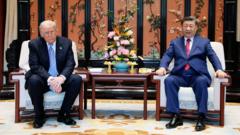
President Trump has warned Taiwan against declaring independence, delivering the message just hours after meeting with Chinese President Xi Jinping. The warning reflects Trump's stated goal of reducing tensions between Beijing and Taipei, positioning himself as a mediator in one of the world's most volatile geopolitical flashpoints.
During his summit with Xi, Trump emphasized the need for both sides to "cool down" rhetoric and military posturing around Taiwan. The timing of Trump's public statement to Taiwan underscores his diplomatic strategy. he appears intent on signaling to both China and Taiwan that his administration will not support unilateral moves that could destabilize the region.
Taiwan's status remains one of the most sensitive issues in US-China relations. Beijing views the self-governing island as a breakaway province and has not ruled out military force to achieve reunification. Washington maintains unofficial relations with Taiwan while officially recognizing the People's Republic of China under the One China policy, a balancing act that Trump's remarks seek to maintain.
Trump's warning carries weight given his unpredictability on foreign policy and his stated desire for closer relations with Beijing. The statement essentially puts Taipei on notice that Washington will not back any declaration of independence, potentially constraining Taiwan's political options. For Beijing, the message provides reassurance that the Trump administration opposes Taiwanese sovereignty moves.
The geopolitical stakes are enormous. Any escalation involving Taiwan could draw the US military into direct conflict with China. Trump's preference for dealmaking and avoiding open conflict shapes his approach here. His emphasis on dialogue and de-escalation contrasts with his tough rhetoric on other issues, but it aligns with his historical skepticism toward military commitments abroad.
The summit outcomes will likely influence Taiwan's strategic calculations for months to come.