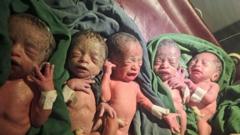
A 35-year-old Ethiopian woman delivered quintuplets after 12 years of trying to conceive, marking a rare medical outcome that defied long odds. She described the birth as an answer to prayer, expressing overwhelming joy at being "blessed with five at once."
Multiple births of this magnitude remain uncommon globally. Quintuplets occur in roughly one in 55 million pregnancies naturally, though fertility treatments increase those odds substantially. The woman's extended struggle to conceive, spanning over a decade, adds emotional weight to her sudden fertility success.
Ethiopia's healthcare infrastructure faces significant constraints compared to developed nations, making access to advanced fertility treatments limited for most residents. The woman's ability to carry and deliver five infants to viability represents both a personal triumph and a notable medical case in a country where maternal and infant mortality rates remain elevated.
Her story reflects broader patterns in how families across Africa approach conception challenges. Cultural and religious frameworks often shape narratives around fertility, as evidenced by her framing the births through a spiritual lens. The extended waiting period she endured underscores the psychological toll of infertility, which affects an estimated 40 to 50 million couples worldwide.
Medical teams managing quintuplet pregnancies navigate heightened risks for both mother and infants. Premature delivery, low birth weights, and complications during pregnancy demand specialized neonatal and obstetric care. The successful outcome in this case highlights the capabilities of Ethiopian medical professionals despite resource constraints that typically characterize healthcare delivery across much of sub-Saharan Africa.