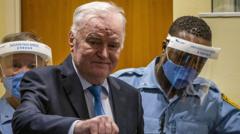
A UN tribunal rejected Ratko Mladić's request for early release from his life sentence, despite acknowledging the 84-year-old Bosnian Serb military leader faces terminal illness. The judge determined that prison conditions at The Hague facility provide adequate comfort for his final years.
Mladić was convicted in 2017 of genocide, crimes against humanity, and war crimes stemming from the 1995 Srebrenica massacre, where Bosnian Serb forces killed roughly 8,000 Muslim Bosniak civilians. He commanded those operations during the Bosnian War.
The tribunal's decision balances humanitarian considerations with accountability. While the court acknowledged Mladić occupies "the final stages of his life," it found no grounds to overturn his conviction or commute his sentence. The International Criminal Tribunal for the former Yugoslavia (ICTY) maintains that his detention conditions meet international standards, including medical care and basic amenities.
This ruling reflects the tribunal's broader stance on aging war criminals serving lengthy sentences. Similar cases involving elderly defendants have reached the court in recent years as perpetrators from the 1990s Balkan conflicts age in custody. The decision sends a message that age and health deterioration alone do not merit release for those convicted of mass atrocities.
Mladić's legal team has exhausted multiple appeals since his 2017 conviction. His case remains one of the most prominent outcomes from the ICTY, which formally closed in December 2022 after two decades of prosecuting Balkan War perpetrators.