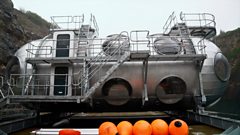
Andrew Rogers examines emerging underwater breathing technology that extends human submersion capacity. The trials represent a breakthrough in dive equipment and represent a shift toward longer, safer underwater exploration.
Recent developments focus on rebreather systems and advanced oxygen recycling mechanisms that allow divers to remain submerged for extended periods. These technologies rebuild carbon dioxide scrubbing and oxygen delivery, reducing tank depletion rates that previously limited dive duration.
Commercial applications span from professional diving operations to scientific research. Deep-sea exploration teams now access previously unreachable depths with greater safety margins. Military applications have also driven innovation in this space, with naval programs investing heavily in extended-duration underwater operations.
The technology works by filtering exhaled breath and reintroducing viable oxygen back into the breathing loop. Traditional open-circuit scuba wastes expelled air, while closed-circuit rebreathers capture and recycle it. This efficiency gain multiplies available breathing time and reduces the physical strain divers experience.
Safety remains paramount. Hypoxia and hypercapnia risks require sophisticated monitoring systems that track oxygen partial pressure in real time. The trials involve rigorous testing protocols ensuring equipment reliability under extreme underwater conditions.
Rogers highlights how these advances benefit not just professional divers but also rescue operations and underwater archaeology projects. Universities and research institutions are partnering with equipment manufacturers to refine these systems. The cost of such technology remains high, but economies of scale suggest broader accessibility within the next decade.
Climate research applications also emerge, with scientists using extended underwater capacity to study coral reef systems and deep ocean ecosystems more thoroughly. The technology enables longer observation periods without decompression interruptions.