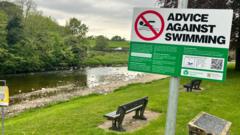
England's river bathing season faces a public health crisis. Water quality tests reveal dangerous bacterial contamination at 12 of 14 designated river bathing sites across the country, prompting authorities to issue "don't swim" warnings.
The contamination stems from faecal bacteria, indicating sewage or agricultural runoff polluting these locations. Environment Agency officials conducted the tests ahead of the peak summer bathing season, discovering levels of E. coli and enterococci far exceeding safety thresholds at the vast majority of sites.
This marks a significant expansion of England's river bathing infrastructure. The government designated these 14 locations as official bathing sites in recent years, part of a push to expand recreational water access and improve river quality following decades of pollution concerns. However, the testing results suggest that designation alone has not solved underlying water quality issues.
The contamination problem reflects systemic infrastructure failures. England's combined sewer systems regularly overflow during heavy rain, dumping raw sewage into rivers. Agricultural activity upstream also contributes nitrogen and bacteria runoff. These factors combine to create hazardous conditions for swimmers, despite growing public interest in wild swimming.
Local authorities face mounting pressure to improve conditions before peak summer months when swimmers typically venture into rivers. The Environment Agency stated that water quality can fluctuate based on rainfall and flows, meaning some sites may achieve safe bathing standards after dry periods. However, the widespread nature of current contamination suggests deeper infrastructure investment is needed.
Only two of the 14 designated sites appear safe for bathing under current conditions. The disclosure arrives as England grapples with broader water quality challenges in rivers and coastal zones, with environmental groups calling for stricter regulations on sewage discharge and faster investment in treatment infrastructure.