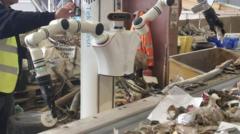
Waste management companies across Europe are turning to humanoid robots to fill acute labor shortages that have crippled sorting operations. The industry faces a critical staffing crisis as workers avoid the physically demanding, low-wage sector, pushing firms to invest in automation technology previously considered too expensive or unreliable.
Waste sorting facilities now deploy robots equipped with computer vision and AI-powered sorting systems to identify and separate recyclables, contaminated materials, and hazardous items from general waste streams. These machines work alongside human staff, handling repetitive tasks that traditionally required dozens of manual sorters per facility. The pivot addresses both workforce scarcity and operational efficiency.
Companies including major European waste processors report that humanoid robots reduce labor costs while maintaining or improving sorting accuracy rates. Some facilities report 30-40 percent increases in throughput after implementing robotic systems. The technology also eliminates exposure to workplace injuries common in waste sorting, a persistent recruitment barrier.
The shift accelerates a broader automation trend in waste management. Labor shortages intensified post-pandemic as workers sought jobs outside the sector. Pay rates, poor working conditions, and stigma attached to waste work drove unemployment levels upward, forcing municipalities and private firms to explore mechanized alternatives.
Equipment manufacturers including tech firms previously focused on logistics and manufacturing now target waste processing as a growth market. Initial deployment costs remain high, typically ranging from $500,000 to $2 million per unit, but declining prices and improved reliability make adoption feasible for mid-sized operators.
Unions voice concerns that automation displaces workers rather than solving labor shortages. Industry bodies counter that robots handle tasks humans actively avoid, freeing personnel for supervisory and technical roles rather than replacing jobs outright.
The trend likely accelerates across North America and Asia as labor pressures mount and automation technology improves.