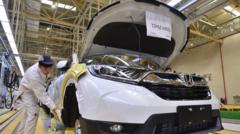
Honda reported its first annual loss in 70 years, forcing the Japanese automaker to recalibrate its electrification ambitions. The company will now delay its target of making all vehicles electric by 2040, pivoting toward a more measured approach that balances EV production with hybrid and combustion engine vehicles.
The loss marks a historic turning point for Honda, which has navigated global recessions, oil crises, and market shifts without posting an annual deficit since the early 1950s. The company faces mounting pressure from slowing EV demand in key markets, supply chain disruptions, and intensifying competition from Chinese manufacturers like BYD that undercut prices aggressively.
Honda's retreat from its all-electric 2040 deadline reflects broader industry reality. EV adoption has plateaued in many regions as consumers balk at premium pricing and charging infrastructure remains inconsistent. Traditional automakers that committed to aggressive electrification timelines now confront inventory pileups and margin compression. Tesla's dominance in battery technology and BYD's cost advantages have forced legacy carmakers to reconsider hard-line EV-only strategies.
The pivot allows Honda flexibility to produce hybrid models, which capture growing demand from buyers unwilling to go fully electric yet. Hybrids offer manufacturers higher margins than pure EVs while addressing emissions regulations that stop short of requiring zero-emission vehicles immediately.
This shift joins similar recalibrations from General Motors, which extended gas-engine production timelines, and Ford, which scaled back EV investment after losses mounted. The EV transition remains inevitable but the timeline has lengthened. Honda's strategy acknowledges that forcing consumers into electric vehicles before technology maturity and infrastructure readiness tilts the market against profitability. The company plans to rebalance its portfolio toward profitable powertrains while maintaining long-term electrification targets, banking on hybrid demand to stabilize earnings before making another EV push.