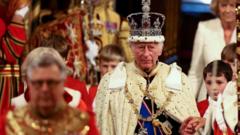
Keir Starmer enters a treacherous political moment. The Prime Minister prepares for the King's Speech, Parliament's ceremonial unveiling of the government's legislative agenda, even as his Labour administration faces an internal leadership revolt.
The timing compounds Starmer's vulnerability. King Charles III's attendance at Parliament to deliver the speech traditionally signals stability and continuity. Instead, Starmer confronts mounting pressure from within his own party. Labour MPs and junior ministers have expressed alarm over government direction and policy decisions, threatening to destabilize his leadership before his administration gains full footing.
The King's Speech itself will outline Labour's priorities, likely touching welfare reform, economic policy, and NHS investment. These pledges carry weight with voters still calibrating their expectations after 14 years of Conservative rule. But internal discord undermines Starmer's ability to project the unity needed to execute that agenda.
Starmer built his leadership campaign on competence and stability. Early missteps and perceived disconnects from party grassroots have eroded that positioning. The revolt reflects deeper tensions between Starmer's centrist approach and Labour's left wing, which controls significant parliamentary numbers. Junior resignations signal that MPs lack confidence in direction from the top.
The ceremonial grandeur of the King's Speech, intended to elevate government messaging, arrives at precisely the moment Starmer needs to consolidate control. He must deliver a speech that reassures the public while simultaneously addressing rebellious backbenchers. Failure to contain the crisis risks defining his early months in office as chaotic rather than purposeful.
Starmer's next moves will determine whether this amounts to typical parliamentary turbulence or something more systemic. The King's Speech provides a platform. Whether he uses it to reset his leadership remains an open question.