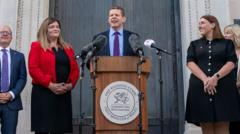
Rhun ap Iorwerth, leader of Plaid Cymru, has unveiled his ministerial team following the party's ascent to power in Wales, framing the appointment as the start of a transformative period for Welsh governance. The new administration signals a shift not merely in political control but in the fundamental approach to running the country.
Ap Iorwerth's cabinet selections reflect Plaid Cymru's priorities after years in opposition. The party campaigned on Welsh independence and progressive policies that diverge sharply from the previous Labour-led government's direction. By emphasizing a "new era," ap Iorwerth positions his team as agents of substantive change rather than continuity.
The ministerial lineup carries weight across Welsh institutions. Portfolio assignments in health, education, economy, and infrastructure will test whether Plaid can deliver on campaign promises while managing the realities of devolved governance. Wales operates with its own parliament at the Senedd, giving the party considerable autonomy in domestic policy.
This moment marks a watershed in Welsh politics. Labour held control of the Welsh Government for two decades. Plaid's emergence reflects voter frustration with incumbent governance and appetite for an alternative voice. The party's independence stance resonates with constituencies seeking greater autonomy from Westminster.
Ap Iorwerth's emphasis on "approach" matters. It suggests his government intends to reshape not just policy outcomes but the processes through which decisions get made. This could mean shifts in public spending priorities, language policy, economic strategy, and relations with the UK government.
The ministerial appointments will face immediate scrutiny. Can Plaid translate electoral mandate into workable policy? The team's performance on cost of living, NHS pressures, and education will define the government's first term. Welsh voters backed change. Now Plaid must prove it delivers.