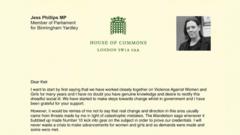
Jess Phillips and fellow government ministers have submitted resignation letters to Prime Minister Sir Keir Starmer, signaling a breakdown in confidence within Labour's cabinet. Phillips, who served as Safeguarding Minister, led a wave of departures that reflects internal party tensions over Starmer's leadership direction.
The resignations mark a rare moment of open dissent within the Labour government. Ministers typically resign over policy disagreements or personal reasons, but coordinated departures often signal deeper fractures. Phillips held a prominent role overseeing child protection and safeguarding policy, making her exit particularly visible within the government structure.
The timing of these resignations comes as Starmer navigates his premiership amid various parliamentary and public pressures. Cabinet departures can weaken a prime minister's authority and create space for backbencher rebellion or opposition attacks on government stability.
The BBC's publication of the full resignation letters provides rare transparency into ministerial decision-making. These documents typically contain carefully worded explanations that balance professional courtesy with substantive critiques. They serve as historical records of political disagreement at the highest levels.
For Labour, the departures represent a test of party unity. The party won power after more than a decade in opposition, and early cabinet splits risk damaging the narrative of a stable, competent government ready to govern. Opposition parties will likely seize on the resignations as evidence of chaos or mismanagement.
Starmer's response to these departures will shape his standing both within Westminster and among the broader Labour membership. How he handles ministerial dissent, whether through reshuffle or dialogue, determines whether this becomes a contained incident or escalates into broader cabinet instability.