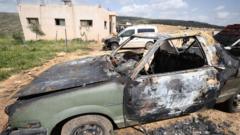
The European Union finalized sanctions against Israeli settlers involved in West Bank violence, marking a rare moment of unity on the bloc's contentious Israel-Palestine stance. EU foreign policy chief Josep Borrell framed the action as direct response to extremist conduct, stating "extremism and violence carry consequences."
The sanctions target settlers accused of attacking Palestinians and their property in occupied territory. The measures include asset freezes and travel bans on individuals deemed responsible for recent violent incidents. EU diplomats characterized the move as proportionate accountability rather than broad geopolitical positioning.
Israel's government rejected the sanctions as "arbitrary," arguing the EU applied selective judgment while ignoring Palestinian militant activity. Israeli officials contended the measures undermine broader peace efforts and reflect bias in international governance. The country's representatives indicated this decision would strain diplomatic ties with Brussels.
The action reflects deepening fractures over Israeli-Palestinian tensions. While some EU member states pushed for stronger action including economic measures against Israeli entities, others resisted broader sanctions. This compromise on settler-level designations represents the EU's attempt to balance internal disagreement with demonstrable commitment to accountability.
West Bank violence has intensified following October 2023, with settlers clashing with Palestinians across multiple locations. UN investigations documented property destruction, displacement, and casualties attributable to settler operations. The EU's designation targets individuals implicated in documented incidents.
This marks one of the EU's most direct accountability measures toward Israeli actors. Previous EU statements condemned settlement expansion and violence but stopped short of formal sanctions. The shift signals growing frustration within European capitals over lack of restraint among extremist settler groups. Whether additional measures follow depends on escalation patterns and internal EU consensus-building in coming months.