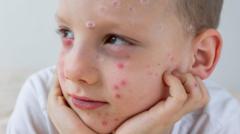
Starting January 2, 2026, the UK's NHS will add chickenpox vaccination to its routine childhood immunisation schedule. The move expands protection against a virus that causes painful blisters, fever, and potential complications including bacterial infections and, rarely, pneumonia.
The chickenpox vaccine has existed for decades and remains standard in many developed nations, including the US, Germany, and Australia. The UK's delayed adoption reflects historical policy favoring natural immunity through infection, though that approach carried real risks, particularly for infants, pregnant women, and immunocompromised individuals.
The decision signals a shift in NHS strategy. Health officials determined that vaccinating children at scale now prevents outbreaks more effectively than waiting for natural exposure. The programme will target infants and young children, with catch-up vaccination available for older kids who lack immunity.
Chickenpox, caused by the varicella-zoster virus, spreads rapidly through respiratory droplets and direct contact with characteristic fluid-filled blisters. While most healthy children recover within one to two weeks, complications occur in roughly one per 1,000 cases. Secondary bacterial skin infections rank among the most common problems. Severe cases can trigger encephalitis or meningitis.
The virus remains dormant in nerve cells after initial infection and reactivates later in life as shingles, a painful condition affecting roughly one in four adults. Vaccination reduces both chickenpox incidence and shingles risk later.
The NHS rollout addresses longstanding healthcare inequities. Wealthier families previously accessed private chickenpox vaccines; lower-income households had no public option. Universal vaccination levels the playing field while building herd immunity across all demographic groups.
This addition modernises the UK's immunisation programme and aligns with global best practices established over the past two decades.