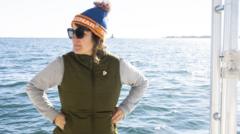
Suzie Flores grows kelp off the California coast with a dual mission. She wants to turn Americans into seaweed consumers while revitalizing struggling fishing communities along the US coastline.
Flores operates a marine farming operation focused on kelp cultivation, a crop that sits at the intersection of food production, environmental restoration, and economic development. Kelp farming requires minimal inputs. Unlike traditional agriculture, it needs no freshwater, fertilizers, or pesticides. The crop absorbs carbon dioxide and excess nitrogen from seawater, making it an environmentally friendly alternative to land-based farming.
The commercial opportunity centers on converting kelp into food products for American consumers. Kelp contains proteins, minerals, and iodine. Flores has developed products designed to appeal to mainstream tastes rather than position kelp as a niche health food. The strategy targets regular grocery shoppers, not just health-conscious early adopters.
The economic angle addresses rural decline in fishing-dependent towns. Marine farming creates jobs for fishermen whose traditional livelihoods face pressure from declining stocks and competition. Kelp farming offers these communities a new revenue stream without requiring them to abandon maritime skills or relocate.
California has emerged as the epicenter of American kelp farming. State regulations support the industry, and coastal water conditions favor growth. However, scaling production requires consumer demand. Most Americans have never eaten kelp in any form. Building that market demands aggressive marketing and product development.
Flores recognizes the challenge. Growing kelp remains easier than convincing Americans to buy it. She positions the crop as sustainable nutrition, environmental solution, and rural revitalization tool simultaneously. Success depends on whether consumers embrace seaweed as ordinary food rather than exotic ingredient.