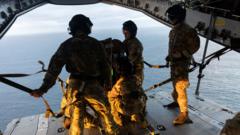
The British Army deployed a specialist medical team to Tristan da Cunha, one of the world's most isolated inhabited islands, to treat a resident suspected of carrying hantavirus. The team parachuted onto the remote South Atlantic territory to reach the patient, highlighting the extreme logistical challenges of providing emergency healthcare in one of Earth's most inaccessible locations.
Tristan da Cunha sits roughly 1,750 miles from the nearest inhabited land and has no airport or regular sea access. The island's isolation made conventional evacuation impossible, forcing military intervention. Hantavirus causes hemorrhagic fever with renal syndrome and carries significant mortality risk if untreated. Early intervention was critical.
The Army's rapid deployment underscores Britain's commitment to supporting its overseas territories during medical emergencies. Specialist paramedics brought diagnostic equipment and treatment protocols directly to the patient rather than attempting a dangerous sea crossing in potentially unfavorable conditions. The parachute insertion allowed the team to establish care within hours of the diagnosis.
Tristan da Cunha's population numbers around 240 people. The island's extreme remoteness, while offering unique isolation benefits, creates vulnerability during health crises. Medical supply chains depend entirely on occasional ships that service the territory. The territory has experienced previous health emergencies that required external military or civilian assistance.
The operation reflects modern emergency medicine's reach. Even in locations where traditional infrastructure fails, specialized teams can mobilize rapidly. The hantavirus case, while serious, became manageable through coordinated military logistics and medical expertise.