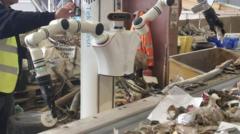
Waste management companies are deploying humanoid robots to fill severe labor shortages plaguing the sector. The move accelerates automation in an industry historically dependent on manual sorting and collection work.
Staffing shortages in waste management have become acute across major markets. Low wages, physically demanding conditions, and high turnover rates have made recruitment nearly impossible for collection and sorting facilities. Humanoid robots offer a technical solution to this labor crisis.
These robots handle repetitive sorting tasks at waste facilities, separating recyclables and contaminated materials. They work 24/7 without fatigue or safety concerns that plague human workers. Early deployments show faster processing times and improved sorting accuracy compared to traditional manual methods.
The shift reflects broader automation trends reshaping blue-collar labor markets. Companies in logistics, manufacturing, and food processing have already embraced robotics to address workforce gaps. Waste management joins this trajectory as operational pressures mount.
However, the transition raises questions about worker displacement. Waste management jobs employ hundreds of thousands globally, many in communities with limited alternative employment. Union representatives have flagged concerns about job losses without retraining programs.
Equipment costs remain substantial. Humanoid robots represent significant capital investment, which smaller waste firms may struggle to afford. This could accelerate consolidation in the industry, favoring large operators with capital access.
The automation wave reflects both pragmatism and economic necessity. Without robots, some waste facilities face shutdowns due to unfilled positions. With them, companies maintain operations but transform the workforce composition fundamentally.
THE TAKEAWAY: Humanoid robots are becoming essential infrastructure for waste management, solving immediate staffing crises while triggering workforce displacement concerns that regulators and companies have yet to adequately address.