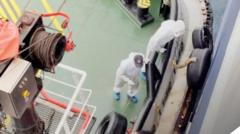
South Africa confirmed two cases of the Andes strain of hantavirus among cruise ship passengers, marking a rare outbreak of human-to-human transmission. The country's health ministry identified the virus in travelers connected to the same vessel, raising concerns about contagion in close-quarters environments.
The Andes virus differs from other hantavirus strains in its ability to spread directly between people, a characteristic that makes it unusually dangerous in crowded settings like cruise ships. Most hantavirus infections stem from contact with rodent droppings or saliva, but Andes transmission occurs through respiratory droplets, enabling rapid spread among passengers and crew.
Health authorities launched contact tracing protocols to identify other potentially exposed individuals from the cruise. The virus causes hantavirus pulmonary syndrome, which begins with flu-like symptoms before progressing to severe respiratory distress in some cases. Mortality rates for Andes virus infections range from 30 to 40 percent, making early detection and isolation critical.
This outbreak highlights vulnerabilities in cruise ship epidemiology. Ventilation systems, shared dining areas, and confined cabins create perfect conditions for airborne pathogens to circulate. The cruise industry faced intense scrutiny during the COVID-19 pandemic over similar transmission patterns, and this incident renews those vulnerabilities.
South Africa's confirmation signals health officials worldwide to heighten surveillance for Andes cases. The strain emerged in the 1990s and remains geographically concentrated in South America, making this cruise ship detection significant for global disease monitoring. Authorities are working to contain spread and prevent cases from reaching other ports.
THE TAKEAWAY: A rare human-transmissible hantavirus strain identified in cruise ship passengers exposes the epidemiological risks of enclosed travel environments.