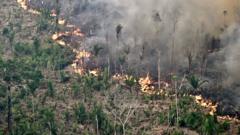
Forest loss decelerated in 2023, marking a rare win for conservation efforts after years of alarming deforestation. New data shows tropical rainforests are vanishing slower than the prior year, particularly in Brazil where aggressive enforcement policies under President Luiz Inácio Lula da Silva have reduced illegal logging and land clearing. The Amazon lost roughly 50 percent less forest in 2023 compared to 2022.
The respite remains fragile. Scientists caution that El Niño conditions sweeping across the tropics pose an immediate threat to this progress. Warmer, drier weather fuels massive wildfires that can ravage forest ecosystems faster than any chainsaw. The 2023 Amazon fires already consumed hundreds of thousands of hectares, and projections for 2024 suggest worse conditions ahead if El Niño persists.
Deforestation drivers persist globally. In Indonesia, forest loss accelerated despite pledges to halt it. Central Africa saw continued clearing for agriculture and timber extraction. The World Resources Institute's analysis underscores a troubling reality: even declining deforestation rates leave forests vanishing at roughly one football field per second worldwide.
The data offers no room for complacency. Tropical forests absorb billions of tons of carbon annually and regulate global climate patterns. Their collapse directly threatens climate targets and biodiversity. Brazil's improved numbers depend on sustained political commitment; any shift in policy could reverse gains instantly. El Niño fires expose another vulnerability: even protected forests burn in extreme heat events, erasing years of conservation work overnight.
The window to stabilize forests narrows. Scientists argue that maintaining current momentum demands international funding, stronger enforcement against illegal operations, and land-rights protections for Indigenous communities who steward forests most effectively.
WHY IT MATTERS: Tropical forests absorb massive carbon stores and regulate global climate. Their loss accelerates runaway warming; their protection remains central to any viable climate strategy.