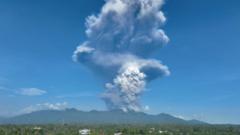
Mount Marapi on Indonesia's Sumatra island erupted without warning on Sunday, killing at least three climbers and leaving several others missing. The volcano sits at roughly 2,891 meters and remains highly active. Authorities had explicitly warned hikers against ascending the mountain due to persistent safety hazards, but climbers ignored those directives and proceeded to the summit.
The eruption expelled volcanic ash and hot gases across the peak, catching the climbing group off guard. Rescue teams launched immediate search operations to locate missing hikers in the treacherous volcanic terrain. Indonesian volcanologists confirmed the eruption met alert-level standards, though officials had not escalated public warnings immediately before the event.
Mount Marapi ranks among Indonesia's most volatile volcanoes. The country sits within the Pacific Ring of Fire, a zone of intense seismic and volcanic activity that stretches across the Pacific Basin. Indonesia experiences frequent volcanic eruptions, earthquakes, and tsunamis due to this geological positioning.
This incident underscores the risks posed by active volcanoes even when authorities issue clear warnings. Climbers frequently disregard official safety guidance, treating volcano ascents as routine mountaineering challenges despite documented hazards. The deaths at Mount Marapi reflect broader patterns across the region where tourism and recreational climbing drive visitors toward inherently dangerous geological sites.
Local officials have begun reviewing access protocols to the mountain. Rescue efforts continue as search teams navigate ash-covered slopes to account for missing persons.
WHY IT MATTERS: Preventable deaths during volcano climbs highlight the tension between public safety warnings and recreational access to natural sites in geologically active regions.