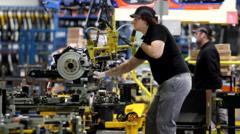
Nissan announced plans to close its UK manufacturing line and eliminate 900 jobs across Europe, dealing a significant blow to British automotive production and the company's European operations. The Japanese automaker will cease vehicle assembly at its Sunderland facility, one of the UK's largest car plants, as it restructures amid mounting losses and the industry's shift toward electric vehicles.
The Sunderland plant, which has operated for nearly four decades, currently produces the Qashqai and Juke models. Nissan indicated it may explore partnerships with a third party to maintain some operational capacity at the site, though full manufacturing cessation appears imminent. The closure removes thousands of direct jobs and threatens suppliers and logistics networks tied to the facility.
This decision reflects broader challenges facing traditional automakers navigating EV transitions while contending with Chinese competition, high energy costs, and shifting consumer demand. Nissan has struggled with profitability, posting significant losses in recent quarters. European operations, including the UK, have become increasingly uncompetitive under current investment models.
The Sunderland closure marks a watershed moment for British manufacturing. The plant represents one of the country's last major automotive production hubs, and its loss underscores the sector's vulnerability post-Brexit. Supply chain disruptions and tariff concerns have already pressured UK car manufacturing, and Nissan's exit accelerates that trend.
Nissan's move signals that legacy automakers face a reckoning. Companies must either rapidly scale EV production with fresh capital investment or abandon traditional manufacturing altogether. The 900 European job cuts, concentrated in assembly and support roles, reflect production consolidation rather than temporary downturns. Workers and regional governments, particularly in the Northeast England region where Sunderland operates, face substantial economic disruption.
THE BOTTOM LINE: Nissan's Sunderland closure marks a turning point for UK automotive manufacturing as traditional plants struggle to justify investment in the EV era.