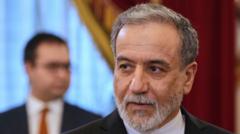
Iran's Foreign Minister Abbas Araghchi leveled sharp criticism at the US, accusing Washington of launching "reckless military adventures" whenever diplomatic pathways emerge. The accusation centers on a pattern Araghchi identifies where military strikes coincide with moments when negotiated settlements appear possible.
Araghchi's statement reflects deepening tensions between Tehran and Washington as the two nations remain locked in conflict over Iran's nuclear program and regional activities. The foreign minister framed US military action as deliberately undermining peace efforts, suggesting that Washington prefers escalation to compromise at critical junctures.
The accusation arrives amid ongoing regional instability. Iran and the US have clashed repeatedly over the past years, from the January 2020 strike that killed General Qasem Soleimani to recent drone and missile exchanges. Both sides accuse the other of provocation and bad faith.
Iran's diplomatic posture has shifted over time. The 2015 Joint Comprehensive Plan of Action (JCPOA) represented a major nuclear accord, though the US withdrew in 2018 under the Trump administration. Since then, diplomatic channels have remained strained, with little traction on renewed negotiations despite international efforts to restart talks.
Araghchi's comments suggest Iran views recent US actions as deliberately timed to collapse talks rather than resolve disputes through negotiation. The claim highlights how both nations interpret each other's military and diplomatic moves through deeply adversarial lenses, making de-escalation extremely difficult.
The accusation underscores why the conflict persists. With each side convinced the other operates in bad faith, finding common ground requires actors willing to break the cycle of accusation and counterattack.
WHY IT MATTERS: These tensions directly affect regional stability, global oil markets, and prospects for renewed nuclear diplomacy.