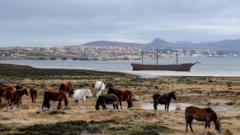
Argentina's territorial claim on the Falkland Islands presents a diplomatic vulnerability for Britain that Trump administration officials will exploit for negotiating advantage. The islands, controlled by the UK since 1833 and defended militarily in a 1982 war with Argentina, remain a flashpoint in geopolitics despite their small population of around 3,500.
Trump's team recognizes the Falklands dispute as a pressure point where they can extract concessions from London on trade, NATO spending, or other bilateral issues. The strategy follows Trump's transactional approach to diplomacy, treating traditional alliances as bargaining chips rather than fixed partnerships.
Britain faces heightened exposure on this front because Argentina's President Javier Milei has aligned closer with the Trump administration, creating an opening for US leverage. The UK government must navigate the delicate position of defending its sovereignty over the islands while managing its relationship with an incoming American administration that views diplomatic friction as opportunity.
For American audiences, the Falklands dispute registers as an obscure historical footnote. For Britons, it carries symbolic weight tied to sovereignty, military pride, and national identity. This asymmetry in public attention works in Trump's favor. He can apply quiet pressure on the UK regarding the islands without domestic political blowback at home, while simultaneously signaling flexibility to Argentina.
The Trump administration's willingness to weaponize traditional geopolitical tensions reveals how differently the incoming US government will operate compared to its predecessors. NATO allies and long-standing partnerships will face new leverage tactics on unfamiliar battlegrounds. The Falklands issue exemplifies how Trump views diplomatic relationships through a cost-benefit lens where nothing remains off the table.
WHAT THIS MEANS: Trump's transactional diplomacy threatens to destabilize decades-old settlements in pursuit of short-term negotiating wins with traditional US allies.