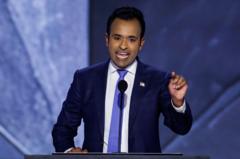
Vivek Ramaswamy secured the Republican nomination for Ohio governor, positioning himself as a sharp critic of the state's pandemic response under Democratic leadership. The biotech entrepreneur and political newcomer built his campaign around attacking how state officials managed Covid-19, a message that resonated with GOP primary voters in a state that has trended Republican in recent cycles.
Ramaswamy enters the general election as the frontrunner in Ohio, a state Donald Trump won twice. His nomination reflects the Republican base's continued focus on pandemic governance as a wedge issue, even as Covid recedes from national headlines. The strategy mirrors playbooks deployed across swing states where GOP candidates weaponized lockdown critiques and public health mandates against Democratic incumbents.
The businessman brings name recognition from his work in the biotech sector and has positioned himself as an outsider willing to challenge establishment politics. His primary victory signals GOP enthusiasm for anti-establishment candidates who connect cultural grievances to specific policy failures, particularly around executive overreach during the pandemic.
The general election sets up a high-stakes clash over state governance. Ramaswamy must broaden his appeal beyond primary voters to win statewide, a task that demands shifting focus from pandemic attacks to economic messaging and Ohio's industrial base. His opponent represents Democratic efforts to defend their record while pivoting toward kitchen-table issues like inflation and jobs.
Ohio remains a bellwether state in American politics. A Ramaswamy victory would signal Republican strength in the Midwest heading into the next cycle. A Democratic hold would demonstrate the party's resilience in contested terrain.
THE TAKEAWAY: Ramaswamy's nomination reflects Republicans' successful weaponization of pandemic governance, but winning a general election requires broader economic messaging than primary attacks alone.