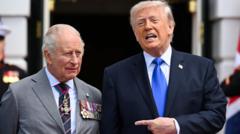
Donald Trump's announcement of a whisky tariffs deal prompted competing claims from both parties over credit for the agreement. Party leaders immediately shifted campaign messaging to highlight their role in negotiating the resolution.
The tariffs dispute, which has long strained US-UK trade relations, centered on spirits exports. Scotch whisky producers faced significant levies that threatened their US market access. The deal's resolution removes a major trade barrier affecting an industry worth billions annually.
Conservative figures argued their administration secured concessions that protected American interests. Democratic leaders countered that their prior diplomatic groundwork and pressure made the breakthrough possible. Both camps rushed to rewrite campaign materials, eager to claim victory with voters in affected regions, particularly those with distillery interests or trade-dependent economies.
The agreement reflects broader US-UK trade normalization efforts. Whisky tariffs became a proxy for larger negotiation dynamics around aircraft manufacturing subsidies and agricultural goods. Removing them signals renewed commercial cooperation, though debates persist over the terms each side received.
For the whisky industry, the deal ends months of uncertainty. Exporters can now plan shipments with predictable tariff structures. Market analysts expect pent-up demand to drive sales recovery once tariffs clear entirely.
The political scramble reveals how trade deals become campaign fodder. Both parties framed the outcome as validation of their economic approach, even as details remained contested. Industry groups stayed neutral publicly, focused on reopening sales channels rather than partisan attribution.
WHY IT MATTERS: Trade disputes directly impact industries and employment, making tariff agreements flashpoints for political credit-claiming that influences how voters perceive economic competence.