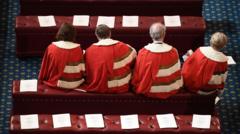
The UK parliament stripped hereditary peers of their remaining seats in the House of Lords this week, ending a 700-year tradition that allowed aristocrats to inherit legislative power. The move comes after legislation passed last month eliminating their right to sit in the upper chamber entirely.
Hereditary peers held 92 seats reserved exclusively for them, a vestige of feudal power structures that gave titled families automatic seats regardless of merit or election. The latest reform eliminates those reserved seats completely, marking the final step in Labour's push to modernize the chamber.
This doesn't erase all hereditary peers from the Lords. Individuals with inherited titles can still sit if they pursue appointment as life peers, a route that requires scrutiny and merit-based selection rather than automatic privilege. But their guaranteed institutional power ends now.
The change represents a symbolic and practical shift in how Britain governs. The House of Lords has faced decades of criticism for its unelected, unaccountable structure. Labour campaigned on Lords reform, and this move strips away one of its most archaic defenses. Hereditary seats represented an indefensible democratic principle. You can't justify 700 years of inherited legislative authority in a modern democracy.
The reform carries real political weight. It removes roughly a hundred right-leaning peers from the chamber, shifting its ideological balance. The Lords already leans Labour, and this tweak reinforces that tilt. It also clears space for demographic and political renewal without requiring the government to appoint thousands of new members.
Some Conservatives framed the move as a power grab. It's better understood as structural rationalization. Hereditary seats became increasingly difficult to defend once anyone examined how they worked. They embodied every argument critics make against an unelected upper house.
The change takes effect immediately, closing a chapter on aristocratic legislative privilege and pushing the Lords closer to what reformers argue it should be. what comes next remains unclear. Labour promised broader Lords reform, but that agenda stalled. For now, the hereditary system that survived Henry VIII, the Civil War, and two world wars finally ends.
WHY IT