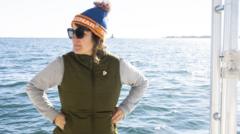
Suzie Flores is building a kelp farming operation designed to reshape how Americans eat and to breathe life back into struggling coastal communities.
The marine farmer grows kelp off the California coast, positioning the crop as both a food solution and an economic lifeline for fishing towns hollowed out by decades of decline. Flores sees kelp as a versatile ingredient, pushable into mainstream diets through pasta, snacks, and supplements rather than niche health-food circles.
Kelp farming addresses multiple pressures at once. The crop requires no freshwater, no fertilizer, and no pesticides. It grows fast in cool ocean waters, absorbing carbon dioxide and nitrogen runoff that degrade marine ecosystems. Flores taps into growing consumer interest in alternative proteins and sustainable food sources, riding trends that have already moved plant-based products from fringe to supermarket shelves.
The real lever, though, sits in rural economics. Small fishing communities along the US coast have contracted as industrial operations consolidated the industry and fish stocks declined. Kelp farming offers jobs in harvesting, processing, and distribution, creating work that doesn't depend on catching wild fish. Flores frames the operation as regenerative agriculture for the ocean, one that stabilizes both ecosystems and paychecks.
The challenge remains consumer adoption. Seaweed carries associations with sushi and niche Asian cuisine in the American mind, not mass-market meals. Flores must rebrand kelp as an ingredient that fits Western cooking habits, not something exotic or foreign. Her strategy targets food manufacturers and ingredient suppliers first, embedding kelp into products people already buy.
The business model hinges on scale. Kelp farming works when operations reach size large enough to support processing infrastructure and distribution networks. Flores competes against imported seaweed from Asia, where kelp farming operates at industrial volumes and lower labor costs. Scaling up while keeping jobs domestic requires either premium pricing or heavy support from retailers and regulators who value domestic sourcing and ocean health.
WHY IT MATTERS: Kelp farming represents a rare intersection of food security, coastal economic revival, and marine environmental restoration