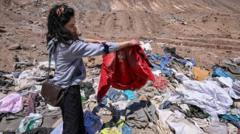
Discarded clothing from wealthy nations is accumulating in South American deserts, particularly in Chile, as the global fast-fashion industry overwhelms recycling systems. Tens of thousands of tons of secondhand garments shipped from Europe, North America, and Asia end up in landfills and open dumps in the Atacama Desert rather than being reused or properly recycled.
The problem stems from a mismatch between donation volumes and local demand. Charities and textile companies export used clothing to developing countries expecting resale, but markets become saturated. Unsold inventory gets abandoned in remote areas where disposal costs are cheapest and regulations weakly enforced. Chile has become a dumping ground partly because it serves as a Pacific gateway for global shipping and lacks infrastructure to handle the volume.
Environmental and labor advocates say the practice shifts wealthy nations' waste problem onto poorer countries while damaging fragile ecosystems. The Atacama, one of Earth's driest regions, now hosts mountains of synthetic fabrics that decompose slowly and leach chemicals into soil and groundwater.
Textile companies and retailers have faced mounting pressure to take responsibility. Some are investing in domestic recycling technology and reducing overproduction. However, experts note that without stronger international regulations and higher prices for new clothing, the industry will likely continue exporting its excess to wherever disposal remains cheapest.