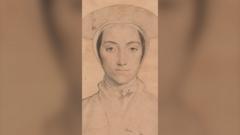
An algorithm analyzing historical portraits has challenged the authenticity of images long attributed to Anne Boleyn, the second wife of Henry VIII. Researchers used artificial intelligence to compare paintings thought to depict the Tudor queen against contemporary portraits and descriptions from her era. The algorithm flagged inconsistencies in facial features and styling that suggest some widely circulated images may not actually show Boleyn at all.
No verified contemporary portrait of Boleyn survives. Historians have relied on paintings created after her 1536 execution, many based on earlier lost works or artistic convention rather than direct observation. The AI analysis raises questions about which images have been misidentified or misattributed over centuries of art-historical tradition.
The findings complicate efforts to understand Boleyn's actual appearance. Museums and archives hold multiple portraits labeled as her depiction, yet this research suggests the attribution process lacked rigorous verification. Art historians acknowledge that portraits from this period often prioritized symbolic or idealized representation over accurate likeness.
The study underscores how artificial intelligence can test assumptions embedded in cultural institutions, though experts caution that algorithmic analysis cannot fully replace traditional scholarly methods. The research does not establish which images, if any, accurately show Boleyn, only that some long-accepted identifications warrant reconsideration.