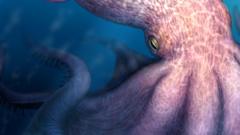
Fossils suggest giant octopuses roamed the oceans 100 million years ago, according to new research. Scientists discovered evidence that these creatures, measuring up to 19 meters long, may have been apex predators during the Cretaceous period. The findings challenge previous assumptions about marine life dominance in ancient seas and expand understanding of cephalopod evolution. Researchers analyzed fossilized remains and trace evidence to reconstruct the behavior and size of these prehistoric octopuses. The discovery adds to growing evidence that cephalopods were far more diverse and dominant in ancient oceans than previously documented. The research contributes to broader scientific knowledge about how marine ecosystems functioned before the asteroid impact that ended the Cretaceous period.